
Case Studies
Insights
Why Brand is high on the agenda for US Universities and Colleges.
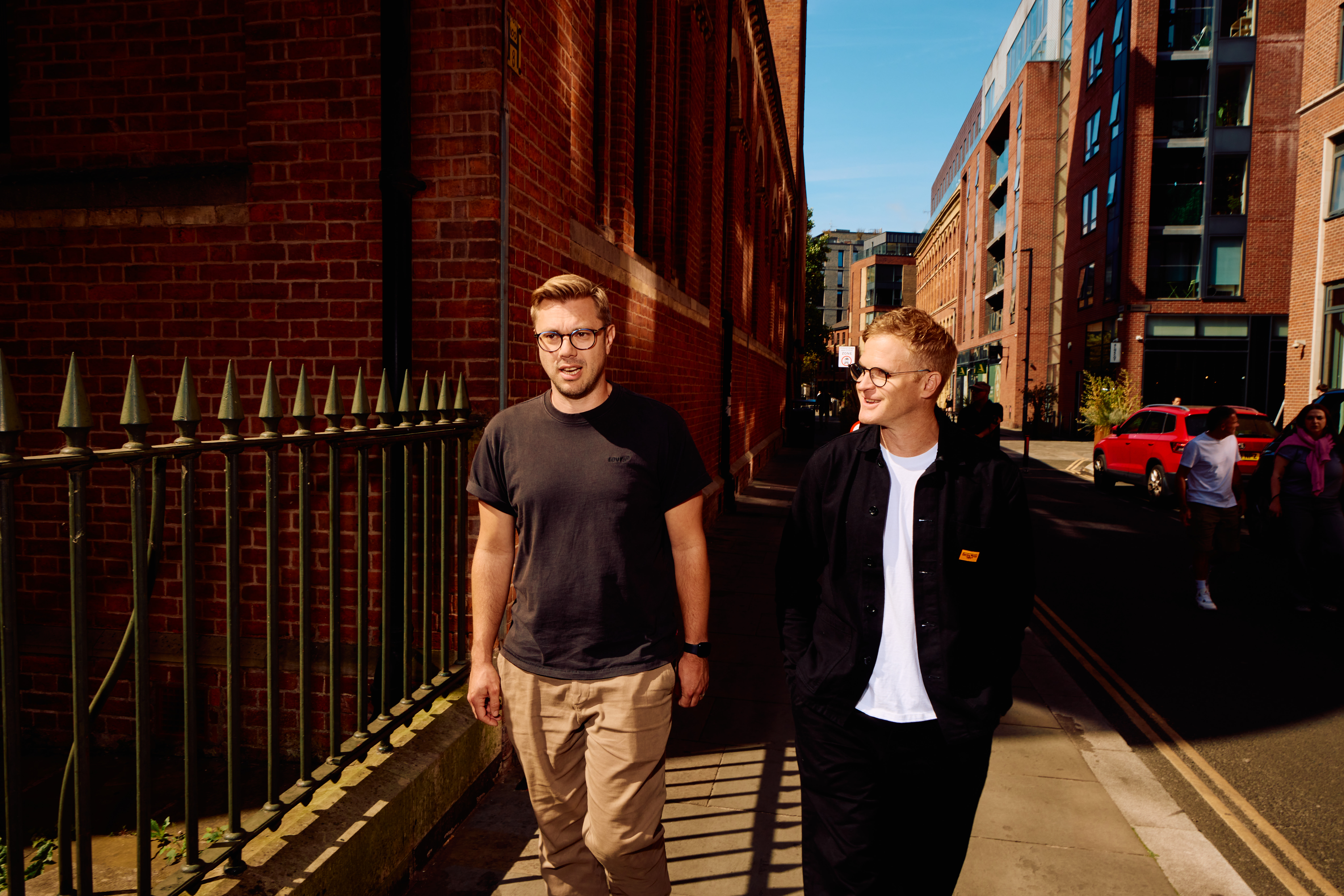
I recently attended Eduweb Summit in Orlando for the first time, joining marketing and admissions leaders from universities across the United States.
The sessions were excellent, but equally impressive was the openness of the people attending, the willingness to share challenges, successes and ideas. To say we felt welcomed would be an understatement.
Looking back on the event, one theme appeared more consistently than any other.
Brand.
Not brand as a communications exercise or awareness campaign, but brand as a recruitment strategy.
What made that particularly interesting was how closely it connected to two other recurring themes. A growing focus on precision over volume, and the increasing influence of AI on how prospective students discover and evaluate institutions.
Together, they paint a picture of a sector in transition, rethinking how recruitment is approached both strategically and tactically.
Brand is increasingly being viewed as a recruitment issue
For years, recruitment conversations in the US have often centred on inquiry generation, lead volumes and funnel growth.
But the conversations I had at Eduweb were much more focused on reputation, differentiation, market position and student experience, and the role these play in recruitment performance.
There was a growing recognition that recruitment outcomes are influenced long before a prospective student actively engages with an institution. How a university is perceived, what it stands for and whether it feels relevant all shape the choices students ultimately make.
Given the demographic and competitive pressures many institutions are facing, it's perhaps no surprise that conversations around brand have become more prominent. Reputation is no longer being viewed as adjacent to recruitment performance. Increasingly, it is being recognised as one of the key factors that drives it.
Precision matters more than volume
Alongside the focus on brand was another recurring theme: precision.
Many conversations centred on audience quality, relevance and fit. The emphasis was on understanding which students an institution is best placed to serve and how to create more meaningful engagement throughout their journey.
That has important implications for targeting, messaging and personalisation. Institutions are becoming more sophisticated in how they think about audience intent, recognising that different prospective student segments have different motivations, behaviours and decision-making processes. That's becoming increasingly important as many institutions look beyond traditional school leaver audiences and seek to engage a broader range of learners. Understanding these differences, and responding with relevant experiences, is becoming a significant factor in recruitment success.
The institutions making the greatest progress are often those creating more relevant experiences, supporting better decisions and building stronger relationships throughout the recruitment journey.
AI is now part of the audience mix
AI featured heavily throughout the conference (goes without saying), but the discussions felt increasingly practical.
Many of the conversations focused on discoverability, generative engine optimisation and how institutions ensure they remain visible as search behaviours continue to evolve.
There was widespread recognition that institutional capability has not yet caught up with the pace of change. The challenge now is accelerating the skills, operating models and ways of working needed to remain effective in a rapidly changing environment.
My own view is that we need to start thinking about AI as an audience in its own right.
Not because AI is making enrolment decisions, but because it is increasingly consuming, interpreting and presenting information about institutions to prospective students. Large language models are already influencing how universities are discovered, compared and evaluated.
It's an audience that doesn't forget. One that hears everything, forms judgements and presents those judgements with a level of confidence that users are increasingly willing to trust.
That creates important new considerations around content, authority, visibility and reputation.
It also reinforces a point that Rich and I made during our Eduweb session - the importance of understanding audiences and designing experiences that meet their needs.
The easiest way for large language models to surface positive information about your institution is to create experiences worth talking about.
Brand promises need to be matched by real experiences. Advocacy, reputation and student experience have always mattered, but as AI becomes part of the audience mix, the signals they create become increasingly important in shaping how institutions are represented and understood.
What Eduweb confirmed
My biggest takeaway from Eduweb was a shift in emphasis.
Universities are thinking more carefully about who they want to reach, how they want to be perceived and where prospective students are discovering information.
Brand is becoming a core recruitment consideration. Precision is becoming more important than volume. AI is increasingly influencing how institutions are discovered and represented.
It’s important we don’t just observe these trends. They require new capabilities, new skills and, in some cases, entirely new ways of working. Many institutions understand the direction of travel. They now need to develop organisational capability at pace.
For a first visit, Eduweb was an incredibly valuable experience. I'm looking forward to continuing many of these conversations and reconnecting with new friends and colleagues in the autumn.
Other webinars
See all webinars-
One institution, many cultures: Turning your team's culture into a driver of performance
Turn culture into a driver of performance. Explore how to measure and improve workplace culture across teams, faculties and locations to support strategy, retention and growth.
Watch webinar 100 -
Media Mapper 2026 Deep Dive
Explore fresh insights from SMRS Media Mapper 24/25, revealing how prospective students engage with media today. Discover evolving behaviours, key channels, and practical ways to refine your media mix and strategy.
Watch webinar 100


In-person events
See all events-

2026 AMA Symposium for the Marketing of Higher Education
Join SMRS at the 2026 AMA Symposium for Higher Education to explore brand, recruitment and engagement strategies shaping the sector's future.
View event 100 -

The PIE Live Ireland 2026
Heading to THE PIE Live Ireland? Meet the SMRS team to explore the ideas, challenges and opportunities shaping higher education's future.
View event 100